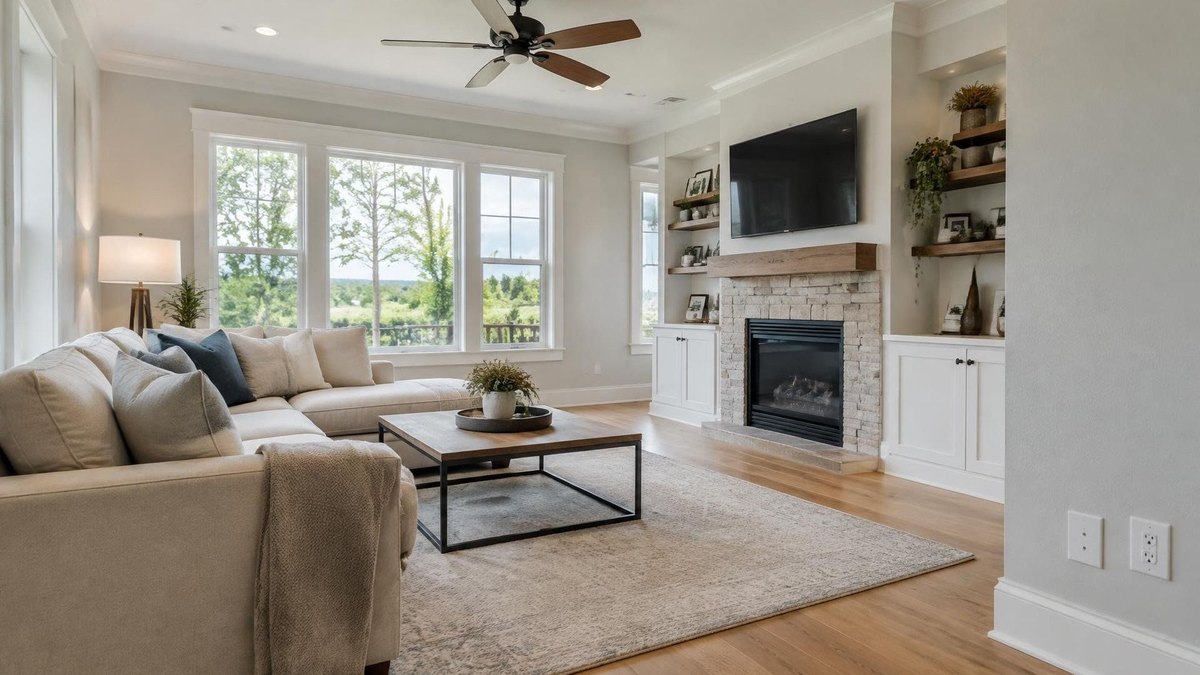
Quick Answer: Ceiling fan installation Las Vegas: when do you need an electrician?
For ceiling fan installation Las Vegas homes need, only a like-for-like swap onto a box that is already fan-rated is a job a handy homeowner can manage, according to the A-Team Electricians podcast. A new fan location, a plastic or unknown box, tall ceilings, outdoor spots and new switches call for a licensed electrician, as does any warm or dead outlet.
Quick Facts
- A ceiling fan box is not the same as a light fixture box. A fan-rated box is built for a rotating, vibrating load, and a fan is a motor of about 40 pounds.
- A fan hung on a standard light box works itself looser with every hour it runs. Wobbling, clicking or drifting away from the ceiling is the usual sign.
- Many builder-grade Las Vegas homes have plastic light boxes in bedroom ceilings.
- A like-for-like swap onto a box that is already fan-rated is the one fan job a handy homeowner can manage. If you do not know what box is up there, call an electrician.
- Call an electrician for no existing fixture, a plastic or unknown box, tall ceilings, outdoor locations, or a new switch such as separate fan and light switches.
- Where fan work adds a new circuit, a permit applies, and A-Team Electricians handles the permit.
- A dead outlet with no tripped breaker is most often a tripped GFCI somewhere upstream, often in the garage or a bathroom. Press every reset button you can find first.
- GFCI protection is required in kitchens, bathrooms, garages, laundry areas, outdoors and anywhere near water. Older homes often have gaps, such as an original garage outlet or a patio receptacle.
- A warm, sparking or hot-smelling outlet is not normal. Switch off that breaker and call a licensed electrician; if there is smoke or flame, leave the building and call 911.
This article expands on Episode 10 of the A-Team Electricians Podcast. The voices in the podcast are AI-generated, and the guidance comes from the A-Team Electricians team, a licensed and insured Nevada contractor (Nevada State Contractors Board License #0093397, bonded to $500,000).
Why does the ceiling fan box matter so much?
A fan is a motor, roughly 40 pounds of it, spinning over your head. A regular light fixture box is made to hold a light. A fan-rated box is built for a rotating, vibrating load and fastened to structure, not just to drywall. That difference is why one fan hums along quietly and another wobbles itself loose.
A fan hung on a standard light box works a little looser with every hour it runs. Many builder-grade Las Vegas homes have plastic light boxes in the bedroom ceilings, so a fan that wobbles, clicks or drifts away from the ceiling is often sitting on the wrong box. Because many of those fans hang over a bed, treat it as a fix to make soon. Blade balance can occasionally be the cause, and an electrician checks both.
What can a handy homeowner handle?
A like-for-like swap, meaning a new fan going onto a box that is already fan-rated, is the one job a handy homeowner can manage. The catch is the word “if.” When you do not know what kind of box is up there, the episode treats that as a call to an electrician.
When should you call for ceiling fan installation in Las Vegas?
Call a licensed electrician when any of these apply:
- There is no fixture in the ceiling at all.
- The box is plastic or you cannot tell what it is.
- The ceiling is tall, sloped, or the spot is outdoors.
- You want a new switch, such as separate switches for the fan and the light.
Adding a fan where nothing exists does not usually mean tearing the ceiling open. It is a wiring job: the electrician runs cable from an existing circuit or the panel, cuts in a fan-rated box, mounts a switch where you actually want it and leaves paint-ready patches. Attic access makes the work easier, and without it the job is more surgical but not impossible. Where the work adds a new circuit, a permit applies, and A-Team Electricians handles it. Our guide to Las Vegas electrical permits and code requirements explains how that works.
High and sloped ceilings need special mounting hardware and longer downrods, and the setup has to be precise or the fan ends up out of balance. A heavy chandelier raises the same issue, so its anchoring gets checked. A two-story entry is a ladder-and-a-guess job to leave to a professional. You can read more about when you need an electrician to install a ceiling fan, or see our ceiling fan installation service in Las Vegas.
What does a GFCI do, and why is my outlet dead?
A ground-fault circuit interrupter, or GFCI, cuts power in milliseconds when current leaks where it should not, such as through a person. The episode compares it to a lifeguard who jumps in before you even yell.
If an outlet in the garage is dead and the breaker has not tripped, the most common answer in Las Vegas homes is a tripped GFCI somewhere upstream, often in the garage or a bathroom. Press every reset button you can find before you call. If that is not the cause, a connection has failed somewhere in the circuit, and that is a diagnosis visit rather than a pull-the-cover-off-and-look situation.
Where should GFCI protection be?
GFCI protection belongs in kitchens, bathrooms, garages, laundry areas, outdoors and anywhere near water. Older homes often have gaps, such as an original garage outlet or a patio receptacle. They met the code of their day, and bringing them up to standard is quick work. If you are not sure what you have, it is a good thing to raise during a visit. Our outlet repair and GFCI service covers exactly this. For general background, the NFPA: Electrical information for home and work pages are a solid public reference.
When is a warm outlet a warning sign?
Treat a warm outlet as not normal. Warmth means resistance at a connection, and resistance builds heat under load.
- Stop using the outlet. If it is warm with nothing plugged in, switch off that breaker and call a licensed electrician.
- If an outlet sparks or smells hot, switch off the breaker and call a licensed electrician.
- If there is smoke or flame, leave the building and call 911 rather than investigating.
None of these is a do-it-yourself repair. This article is general information, not a substitute for an on-site evaluation by a licensed electrician.
The short version
A fan needs the right box. A new fan location, a tall ceiling or a warm outlet needs a licensed electrician. And it is worth checking GFCI protection in every wet spot of your home.
Next step: if you are planning a fan, chasing a dead outlet or wondering whether your garage and patio are protected, request a free estimate through our contact page and the A-Team will take a look.
Further reading: NFPA: Electrical information for home and work.
Frequently asked questions
Do I need an electrician for ceiling fan installation in Las Vegas?
A like-for-like ceiling fan swap onto a box that is already fan-rated is a job a handy homeowner can manage. Ceiling fan work with no existing fixture, a plastic or unknown box, tall ceilings, outdoor locations or new switches calls for a licensed electrician.
Why does my ceiling fan wobble?
A wobbling ceiling fan is most often hanging on a standard light box that was not built for a rotating, vibrating load, and it works itself looser with every hour it runs. Blade balance can occasionally be the cause, so an electrician checks both.
Why is my outlet dead when the breaker has not tripped?
A dead outlet with no tripped breaker is most often a tripped GFCI somewhere upstream, frequently in the garage or a bathroom, so press every reset button you can find. If that does not fix it, a connection has failed in the circuit and the outlet needs a diagnosis visit.
Is a warm outlet dangerous?
A warm outlet should be treated as a warning, because warmth means resistance at a connection and that builds heat under load. Stop using the outlet; if it is warm with nothing plugged in, switch off that breaker and call a licensed electrician. Smoke or flame means leave and call 911.
This article is general information, not a substitute for an on-site evaluation by a licensed electrician. A-Team Electricians: Nevada State Contractors Board License #0093397; bonded to $500,000; licensed and insured. If there is smoke or flame, leave the building and call 911.